
For an aquaculture enterprise to reach more demanding markets, production alone is not enough. Companies must comply with standards, obtain licences, demonstrate conformity, use credible laboratories, respond to audits and prove that their products are safe, traceable and of good quality. This is where the national quality infrastructure becomes essential.
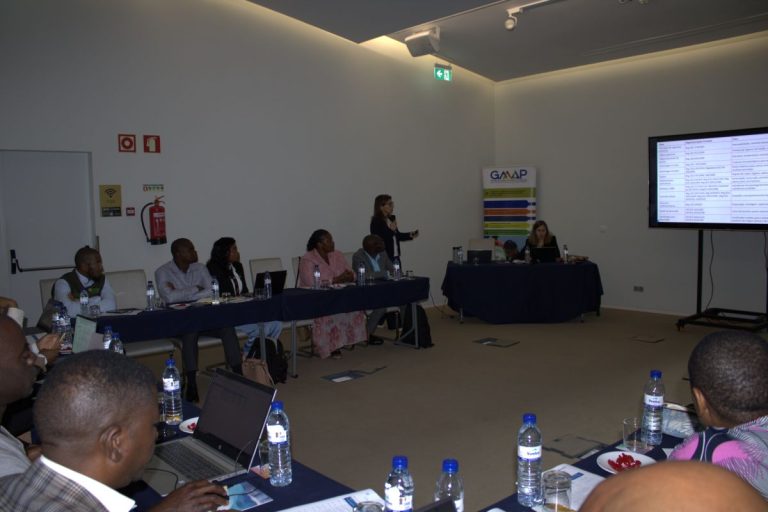
Under MAMAP, a UNIDO methodology was applied to analyse the aquaculture value chain, map standards and technical regulations, identify conformity-assessment requirements, understand the role of quality institutions and diagnose the capacities of small and medium-sized enterprises.
The presentation showed that quality must be seen as a system. In that system, public institutions define rules, inspect, certify and provide services; laboratories analyse and generate evidence; companies apply good practices; and organised producers respond to market requirements. When one part fails, market access becomes more difficult for everyone.
The diagnostic also highlighted important challenges: information gaps on enterprises, weak or absent licensing in some units, certification difficulties, inadequate infrastructure, uncalibrated equipment, limited use of quality services and low visibility of institutions that provide technical support.
Another important issue was the role of women and youth in both institutions and companies. The value chain needs to make better use of these capacities through training, opportunities and clear inclusion strategies.
The recommendations point to updated legislation, clearer institutional responsibilities, stronger traceability, SME technical training, certification support, quality promotion and better communication between institutions and operators. Quality infrastructure is therefore a bridge between production and markets. Without it, aquaculture potential remains limited.
Watch the full video
Comments and conversation