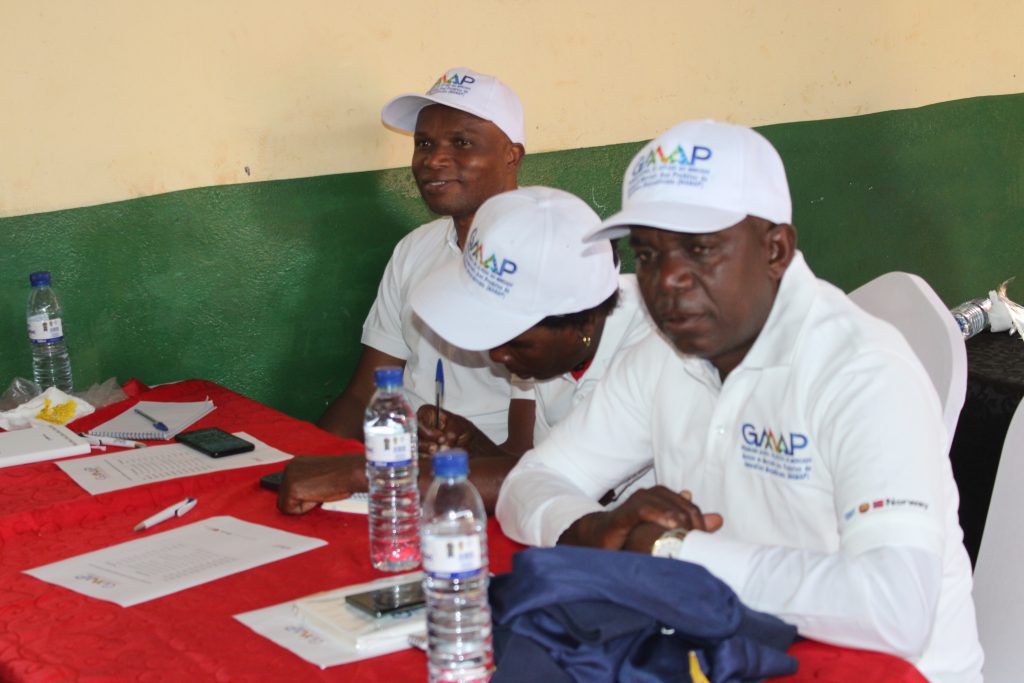
Norway-funded initiative aims to strengthen technical capacities and improve access to international markets
Maputo, January 26, 2026 – The MAMAP Project (Market Access for Mozambican Aquaculture Products), implemented by UNIDO with funding from the Norwegian Agency for Development Cooperation (Norad), in close collaboration with the Ministry of Agriculture, Environment, and Fisheries (MAAP) and the Mozambican Aquaculture Association (AMAQUA), is launching a strategic series of training courses on Biosecurity in Aquaculture in the provinces of Niassa, Nampula, Manica, Sofala, and Tete.
The training will take place in two phases: the first phase, from January 26 to 29, 2026, covers the provinces of Niassa, Majune district (January 26) and Nampula, Nacala district (January 28). The second phase will take place from February 2 to 6, 2026, in the provinces of Manica, Sofala, and Tete. This initiative is part of the Global Market Access Program (GMAP) and is in line with the Mozambican Government’s Aquaculture Development Strategy 2020-2030.
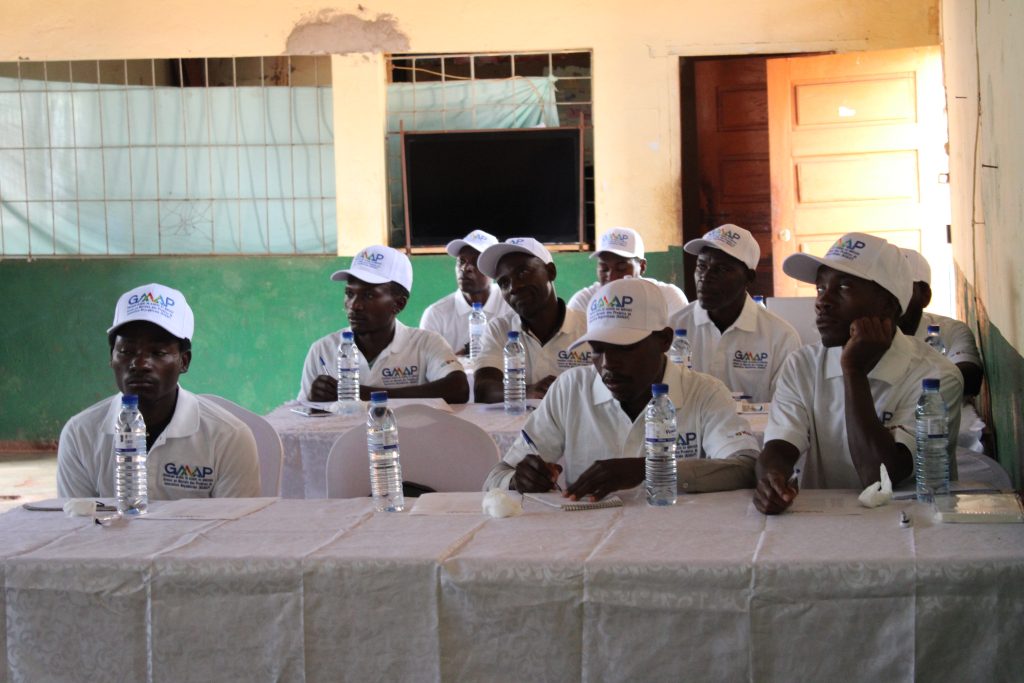
Context and Strategic Importance
Mozambique has an estimated aquaculture production potential of around 4 million tons per year, with a total available area of 378,000 hectares. However, current production remains significantly below this potential, with only 3,770 tons recorded in 2019, of which only 278 tons (7.4%) were exported.
The Mozambican aquaculture sector faces critical challenges related to biosecurity, including the management of aquatic diseases, the implementation of good production practices, and compliance with international health requirements. The recent threat of disease outbreaks, such as Epizootic Ulcerative Syndrome (EUS) in neighboring countries, and the historical impacts of the white spot disease (WSD) virus on the shrimp sector, underscore the urgency of strengthening national biosecurity capacities.
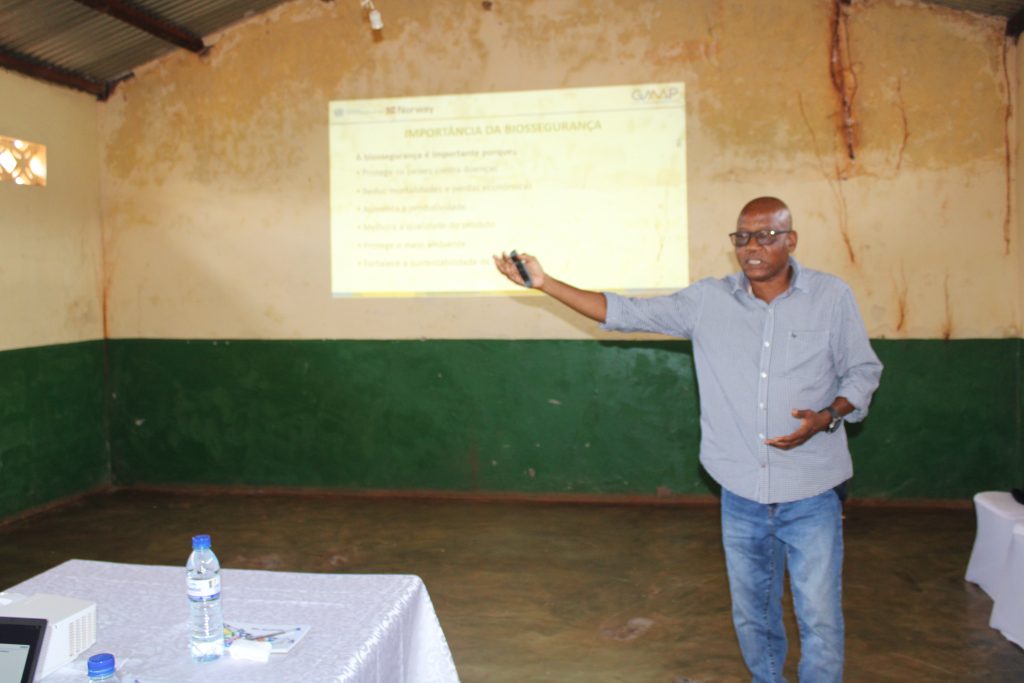
Capacity Building for Competitiveness and Sustainability
“Biosecurity is essential to protect aquaculture production from disease, reduce mortality, and increase the productivity of fish farms,” says trainer Vicente Ernesto. “Prevention is always more economical than treatment. These training courses will provide operators with practical tools to manage health risks, directly contributing to compliance with the sanitary and phytosanitary (SPS) requirements demanded by international markets.”
The workshops are aimed at technicians from aquaculture establishments, professionals from the National Fisheries Research Institute, the Institute for Fisheries and Aquaculture Development (IDEPA), and the National Fisheries Inspection Institute (INIP), integrating the theoretical and practical dimensions of aquaculture biosecurity. The training is aligned with the three strategic pillars of the MAMAP Project: (1) strengthening the National Quality Infrastructure, (2) improving SME compliance with international standards, and (3) promoting a culture of quality.
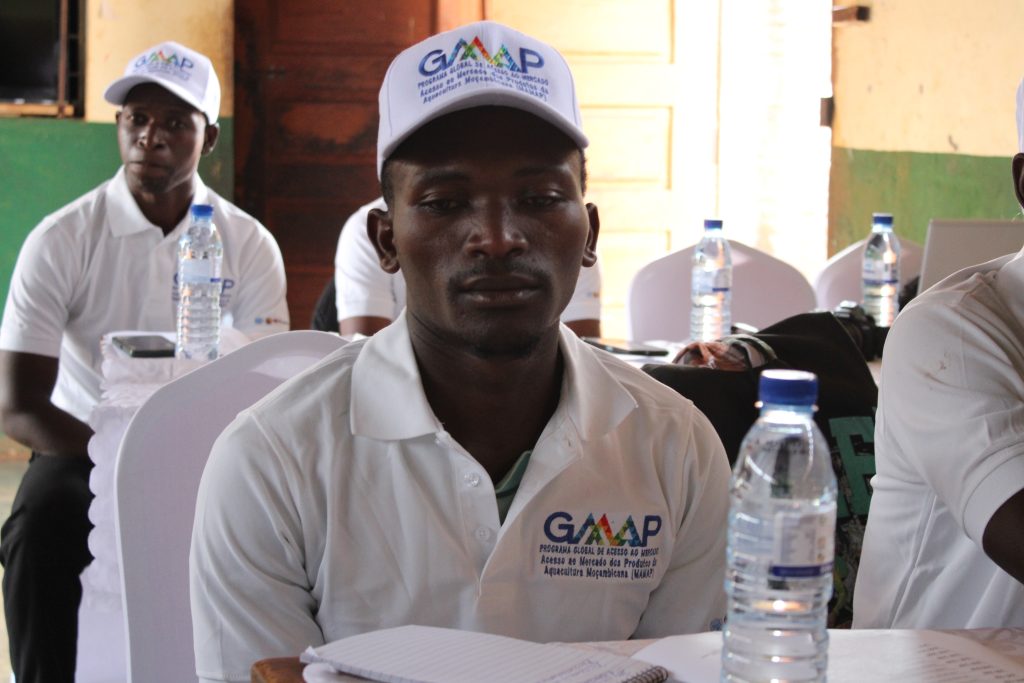
Training Objectives and Content
Throughout the training sessions in each province, participAants will:
- Understand the concept of biosecurity in aquaculture as a risk management tool and its importance for business sustainability and market access
- Recognize the main health risks in a fish farm, identify disease transmission routes, and assess probabilities of occurrence
- Acquire skills to develop a customized biosecurity plan, adapted to the specificities of each production unit and in accordance with international requirements
- Apply practical disease prevention and control measures, including pest management, quarantine protocols, and good management practices
- Develop effective contingency plans for rapid response to disease outbreaks, minimizing economic and production impacts
The training is based on the “Guide for Developing a Biosecurity Plan for Fish Farming,” prepared by the Fisheries Inspection Institute, IP, and addresses fundamental aspects such as risk analysis, hazard identification, methods for assessing the probability of disease occurrence, primary transmission routes, pest management, and emergency procedures.
Participatory and Practical Methodology
The program combines theoretical presentations, group dynamics, and practical demonstrations, ensuring that participants can immediately apply the knowledge acquired in their production units. Each training session is adapted to local realities and the specific challenges of each province, promoting the contextualized appropriation and application of knowledge.
“The biosecurity plan is the fish farm’s protection manual,” the program documentation emphasizes. “It is not just about cleaning, but about thinking strategically, organizing processes, and controlling risks in a continuous and systematic manner. It is a management approach that protects investment, increases productivity, and opens doors to more demanding markets.”
Expected and Long-Term Vision
The training courses aim to achieve concrete and measurable results for the development of the Mozambican aquaculture sector:
- Significant reduction in fish mortality in production units through the implementation of effective preventive measures
- Improvement in growth, feed conversion, and overall productivity rates
- Substantial reduction in emergency treatment and health crisis management costs
- Increased quality and safety of the final product, boosting competitiveness
- Greater confidence among domestic and international buyers, facilitating access to more demanding regional (SADC) and international markets, including the European Union and Asian markets
- Strengthening the resilience and sustainability of the aquaculture business in the face of external shocks, including climate change
- Contribution to food and nutritional security by increasing the availability of quality aquatic protein
- Creation of skilled jobs, particularly for young people and women throughout the value chain
In the long term, these training courses are expected to contribute to the ambitious goal of the 2020-2030 Aquaculture Development Strategy, which aims to achieve 400,000 tons of aquaculture production and create more than 500,000 jobs by 2030, transforming aquaculture into a fundamental pillar of Mozambique’s blue economy.
About the MAMAP Project
MAMAP (Market Access for Mozambican Aquaculture Products) is a 42-month project, with an investment of €2 million financed by Norad, which aims to improve market access for Mozambican aquaculture products by strengthening technical capacities, improving food quality and safety, and adopting good production practices.
The project is part of the Global Market Access Programme (GMAP), a UNIDO programmatic initiative that promotes inclusive and sustainable industrial development by strengthening quality infrastructure and compliance with international standards. MAMAP works closely with MIMAIP, IDEPA, INIP, IIP, AMAQUA, and other government and private entities to promote the sustainable development of the aquaculture sector in Mozambique, with a special focus on the participation of small producers, women, and young people.
The choice of the aquaculture value chain is based on its strong potential for competitiveness, job creation, contribution to food security, and alignment with national development priorities. Despite current challenges, the Mozambican aquaculture sector shows exponential growth potential that can contribute significantly to national economic growth, poverty reduction, and improvement of the trade balance.