“Women Shaping the Future of Industrialisation” — UNIDO Mozambique Webinar, 21 April 2026
On 21 April 2026, Mozambique joined the world in a historic celebration of the first International Day of Women in Industry (IDWI) — a date established by the 21st General Conference of UNIDO in November 2025, and endorsed by all member states.
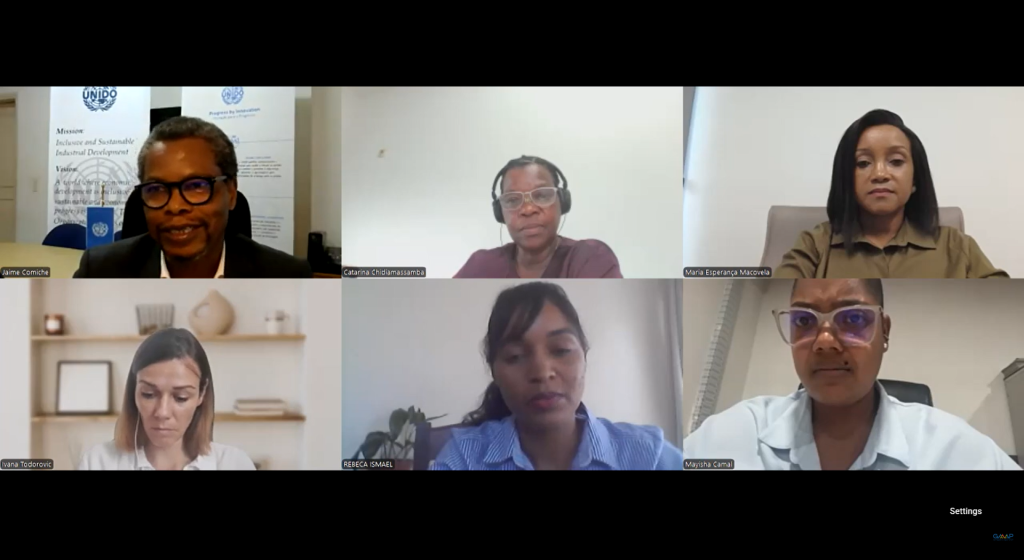
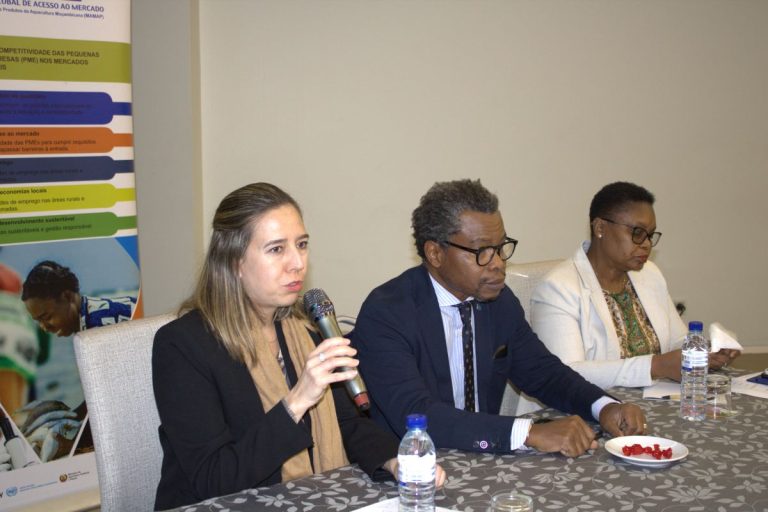
To mark this milestone, UNIDO Mozambique organised a virtual webinar and roundtable discussion under the theme “Reality, Experiences and Challenges of Women’s Participation in the Industrialisation of Mozambique”, bringing together leaders and specialists from across the national economy.
The MAMAP Project — Market Access for Mozambican Aquaculture, funded by Norad and implemented by UNIDO — was represented on the panel, reinforcing its commitment to advancing gender equity across the fisheries and aquaculture value chain.
▶ Click to watch — Full webinar · International Day of Women in Industry · UNIDO Mozambique · 21 April 2026
A Conversation That Came at the Right Time
Opening the session, UNIDO Representative in Mozambique Jaime Comiche placed the occasion in the context of both global and national priorities, expressing hope that next year’s celebration could be held in person and with greater fanfare.
The session featured a video message from the UNIDO Director-General, who recalled that women represent 50% of the world’s population yet remain underrepresented in industry — too often in low-paid jobs, too rarely in leadership positions.
“We are not talking about favours or concessions. We are talking about economic justice, productive efficiency and national development.”
— H.E. Custódia Paunde, Secretary of State for IndustrySecretary of State for Industry, H.E. Custódia Paunde, delivered a substantive opening address, referencing the National Programme Industrialise Mozambique (ONAI) as a concrete instrument to drive investment and generate employment — “especially for young people and women”.
The Panel: Five Voices, One Message
The discussion panel brought together five women with distinct trajectories, all with direct experience at the intersection of gender and industrialisation.
M
Maria Esperança Macovela
Senior Adviser, Ministry of Mineral Resources and Energy (MIREME)
With 25 years in the energy and mining sector, she highlighted that all department directors at MIREME are women, and that they led the review of the sector’s entire legal framework. “We have moved past intention — we now need to accelerate so that more women can participate in the sector.”
Catarina Chidiamassamba
Mais Peixe Sustentável Programme · Blue Economy Development
Works with women artisanal fishers in coastal communities. The programme established that at least 40% of grant beneficiaries must be women, using the Gender Action Learning System (GALS) methodology to build economic empowerment from the ground up.
Rebeca Ismael
Entrepreneur and activist · Café Vumba Project, Manica
In the Café Vumba Project, 80% of more than 350 beneficiary families are women. “That figure is not just a number — it is a synonym for strength and women’s financial independence.”
Mayisha Camal
Grupo CIR — mobility, industry and logistics (Metrobase, Cometal)
Spoke of the responsibility of opening the way in predominantly male environments. “It is not just about opening doors — it is about making sure people can enter, grow and stay.”
Ivana Todorovic
COO and Marketing Director, MozParks
With leadership experience across multiple sectors and countries, she highlighted the internship programme with 60% female participation and the importance of starting this change early — in schools and in families alike.
Three Ideas That Stayed
Intentionality — adjusting formats, schedules and methodologies — is what makes the difference. Equal conditions alone are not enough when society starts from a structurally unequal position.
The consensus was clear: providing capital without prior capacity-building yields low success rates. Knowledge is what makes financing effective and lasting.
There is no sequence — cultural change within families and institutional commitment must advance simultaneously, including the transformation of the field technicians who work directly with women.
“If you want a good man for the job, hire a woman.”
— Jaime Comiche, UNIDO Representative in Mozambique, quoting a saying shared in the debateThe Blue Economy’s Voice in the Room
The MAMAP Project’s presence in this debate is no coincidence. Artisanal fisheries and aquaculture in Mozambique rely heavily on women — in post-harvest activities, trade and processing. MAMAP has been integrating a gender perspective into its market access approach.
The mobility barrier — identified by Catarina Chidiamassamba as one of the main obstacles facing women in coastal communities, some located more than 150 km from district towns — is also a challenge MAMAP faces in disseminating good practices around hygiene, food safety and access to formal markets.
The solutions shared at the webinar — bringing technicians into communities, running targeted funding calls for vulnerable groups, and ensuring procedures are ethical, transparent and free of violence — align directly with the project’s intervention philosophy.
Looking Ahead
Jaime Comiche’s closing remarks were at once a summary and a commitment:
“I would like this to be the first step of a coordinated action across sectors to give visibility to the participation of women and girls in the inclusive industrialisation of Mozambique.”
— Jaime Comiche, webinar closingThe first edition of IDWI in Mozambique was marked by the quality of the debate, the diversity of voices and a shared sense of urgency. The path is clear: capacitate, include and — above all — be intentional.
The MAMAP Project — Market Access for Mozambican Aquaculture — is funded by Norad and implemented by UNIDO Mozambique. The project supports smallholder producers and aquaculture enterprises in accessing national and international markets, with a focus on quality, biosecurity and inclusive value chain development.
Comments and conversation