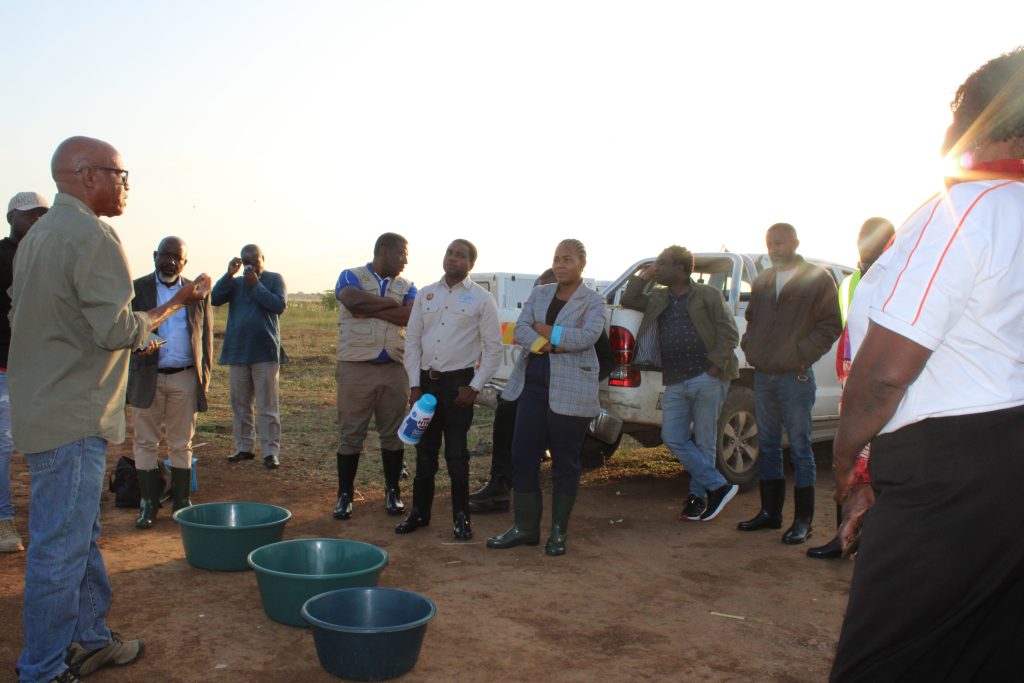
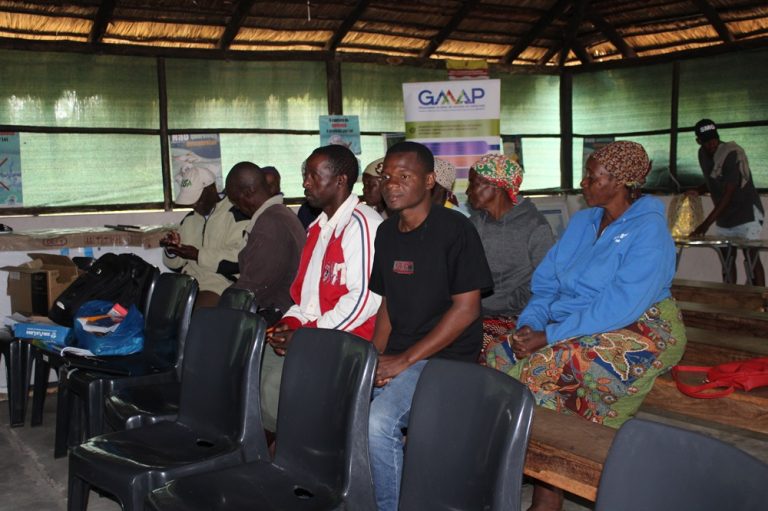
Moamba, May 12, 2025 – On a morning marked by sharing experiences, practical learning, and community spirit, fish farmers from the province of Maputo gathered today at the Moamba Tilapia unit for the start of regional training in aquaculture biosecurity, as part of the MAMAP Project, implemented by UNIDO with funding from NORAD.
The training, which brings together aquaculture operators and technicians from INIP and IDEPA, aims to respond to a common challenge across the country: how to prevent disease in fish farms and protect aquaculture production. Many of the participants came with clear expectations—to learn how to prevent losses and improve their results.
“Sometimes our fish suddenly get sick and we don’t know why. This training is helping us to better understand the causes and what we can do to prevent this,” said Rui Gomes, a fish farmer at Frangos de Mahubo.
Each fish farmer left with a plan in hand.
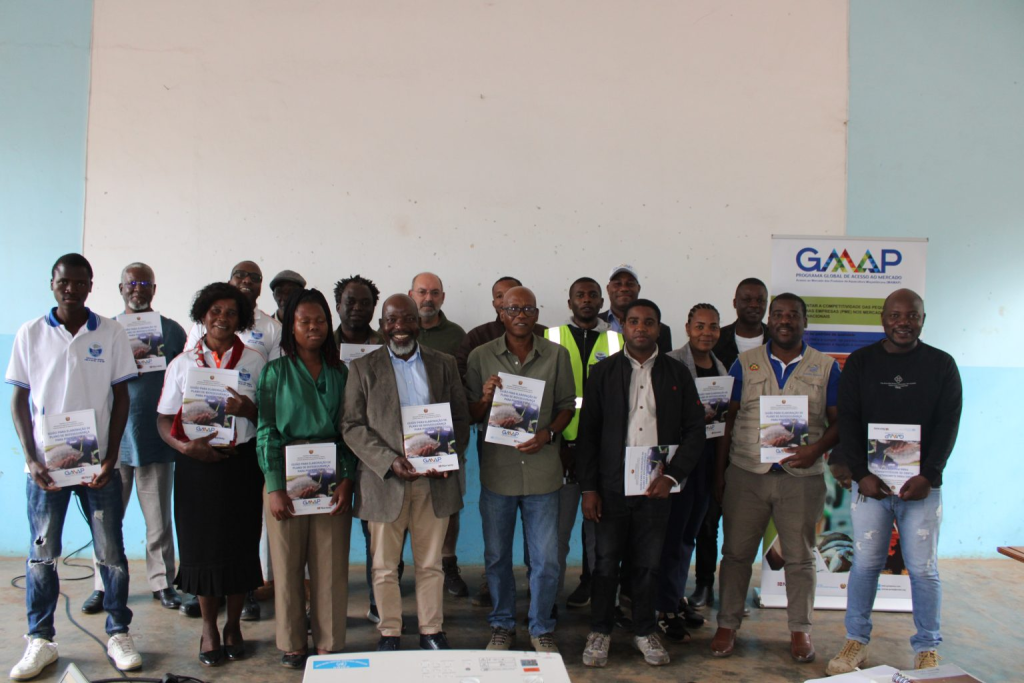
To reinforce learning and ensure practical application of what was taught, each participant received a printed copy of the Fish Farming Biosafety Manual, prepared by the Fish Inspection Institute (INIP) with technical support from UNIDO.
“This manual is like a compass for those who work with fish,” said Lúcia Machaila, a producer at the Moamba Tilapia unit. “With it, we can apply what we have learned here right here in our units, step by step.”
The document contains detailed guidelines on risk analysis, hygiene, quarantine, pest control, and response to disease outbreaks—making it an essential tool in the daily lives of fish farmers.
Biosafety: from theory to practice, step by step
During the afternoon, trainees participated in a practical session that transformed theoretical concepts into real actions: they set up footbaths, prepared chlorine disinfectant solutions, analyzed water entry points, discussed the use of personal protective equipment (PPE), and simulated the control of people and waste circulation in the units.
With the support of consultant Vicente Ernesto, participants even learned how to calculate the ideal chlorine concentration in large tanks, such as those measuring 1,000 m² and 2 meters deep, promoting a scientific approach accessible to the local context.
“Biosecurity is like invisible insurance: it protects fish, family income, and even the environment. And most importantly, it does not require large investments—it starts with small changes in attitude,” the consultant emphasized during the demonstration.
Next stops: Gaza and Inhambane
Training continues this week in other strategic locations for Mozambican aquaculture:
May 14: Papapesca – Chokwé (Gaza)
May 15: Sihaka – Zavala (Inhambane)
May 16: Block 6 – Maxixe (Inhambane)
With these actions, the MAMAP Project reaffirms its commitment to safer, more sustainable, and more inclusive aquaculture, supporting local producers in protecting not only their ponds but also their dreams.
Comments and conversation