Residue monitoring: protecting fish safety
INIP presented Mozambique’s residue-control experience, laboratory challenges and steps to strengthen the safety of fishery and aquaculture products.
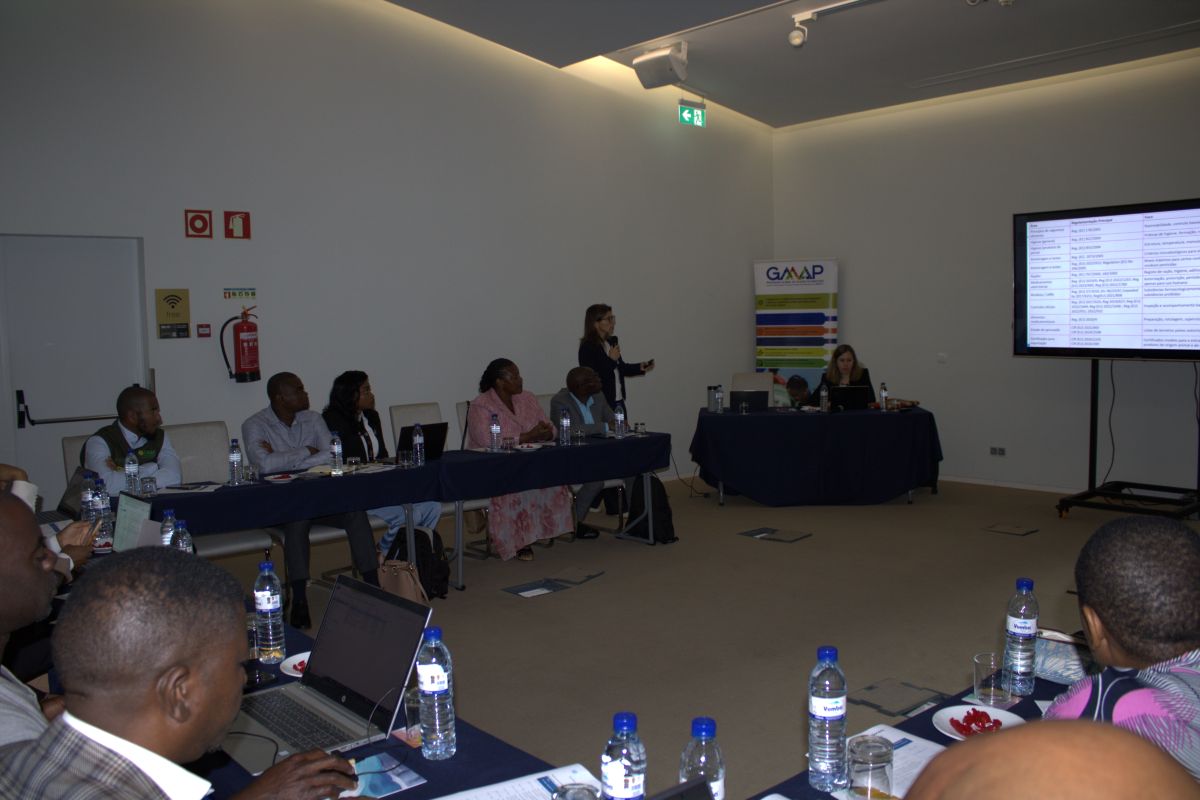
Training supported by MAMAP explains the legislation, official controls and food-safety requirements governing access to the European Union.
Assessments of aquaculture enterprises helped identify gaps and guide training, procedures and HACCP implementation support according to each facility’s readiness.
For an aquaculture enterprise to reach more demanding markets, production alone is not enough. Companies must comply with standards, obtain licences, demonstrate conformity, use credible laboratories, respond to audits and
Standards NM 1274 and NM 1275 provide benchmarks for tilapia fingerling and feed quality. INNOQ’s presentation explored their importance for producers and the market.
Producer organisation is essential for improving market access. Under MAMAP, AMPCM presented its experience in promoting the cooperative model and transforming groups and associations into cooperatives linked to fisheries and
Mozambique has a strong fishing tradition and major potential to develop aquaculture. However, fish quality can be lost quickly when products are poorly handled, transported or processed. For this reason,
Fishing is work. Business is knowing how to sell the product of that work. This was one of the strongest messages from the presentation on business-management tools for artisanal fisheries
The MAMAP-supported assessment identified national laboratory capacities and needs, with recommendations on equipment, skills, quality and coordination.
Producers, technicians, cooperatives and enterprises can use the project manuals to improve production, biosecurity, quality and business management.